Small teams keep outscaring the biggest studios in gaming. The best indie horror games right now – Amnesia: The Dark Descent, SOMA, Visage, Phasmophobia, Lethal Company – were all built without blockbuster budgets, and none of them needed one. Real terror has never been a money problem.
For the full horror games guide covering AAA and indie titles alike, see our complete horror games guide. This guide ranks 15 of the best indie horror games of all time across psychological, survival, atmospheric, and co-op subgenres. It also covers the best horror games on Steam, free indie horror worth playing, new releases for 2025-2026, and which titles work best for streaming. Every game here earned its spot by sticking with you long after you closed it.
Why Indie Horror Games Hit Different
Why Indie Horror Games Hit Different
Shareholders do not greenlight disturbing games. That single constraint explains why indie horror games land scares that big-studio titles keep fumbling.
Once you understand what indie games are, the pattern clicks fast. Corporate oversight sands down every sharp edge. Disturbing themes get sanitized. Experimental mechanics get swapped for focus-tested formulas. What survives the approval chain is competent, forgettable horror – the kind that checks boxes without leaving marks.
Indie developers skip that entire process. They chase themes that would make a marketing department sweat. They build a whole game around one unsettling idea and commit to it completely. The result feels dangerous in a way no committee-approved design document can reproduce.
Why Lower Budgets Create Better Scares
When you cannot afford photorealistic graphics, you find other ways to disturb players. Sound design, oppressive atmosphere, and psychological manipulation become the primary tools. Some of the scariest moments in gaming history came from developers who could not render the monster clearly – so they made you imagine something worse.
Lower budgets also force developers to get personal. Detention pulls its horror directly from Taiwan’s White Terror period – real political violence, real cultural ghosts. Iron Lung was one developer channeling deep-sea claustrophobia into a 45-minute nightmare. You can feel the difference between a game born from someone’s actual fears and one assembled on a brainstorming whiteboard. The authentic ones hit bone.
Fear has nothing to do with graphical fidelity. It lives in pacing, in atmosphere, and in the dark spaces your imagination fills when a game refuses to show you everything. The best indie horror games have understood this for fifteen years running.
Best Indie Horror Games of All Time
Best Indie Horror Games of All Time
Fifteen years of indie horror have produced masterpieces across every subgenre. These 15 games redefined what horror could achieve, and every new release still gets measured against them. Many double as interactive story games where narrative and fear feed off each other.
Psychological Horror That Messes With Your Mind
Psychological horror strips away your weapons and your certainty. These games attack your sense of reality, leaving you unsure what is actually happening – or whether you can trust the game itself. Faith, a retro pixel-art horror game from Airdorf Games, proves that even the simplest graphics can deliver deep unease through rotoscoped animations and demonic rituals. Style matters more than fidelity.
Amnesia: The Dark Descent is where modern indie horror starts.
Frictional Games took combat out entirely -- you cannot fight, only hide and run from things you can barely look at before your sanity cracks. That powerlessness is the whole point. Seeing a monster clearly makes it less frightening, so Amnesia kept you in the dark, jumping at every creak and distant footstep. The
Amnesia series went on to spawn sequels and shape virtually every horror game that followed it.
What if the scariest thing in a horror game was not a monster but a philosophical question you could not answer?
SOMA, also from Frictional Games, is set in an underwater research facility where the line between human consciousness and machine copies has dissolved. The creatures stalking the corridors matter less than the slow horror of realizing what the game is actually asking you. SOMA sticks in your head for days after the credits roll.
Layers of Fear makes the environment itself hostile. Bloober Team built a Victorian mansion that rearranges when you are not looking -- rooms reshape, paintings warp, and corridors loop back on themselves as a painter's mind deteriorates. You stop trusting doors. Every one might open onto something impossible.
Visage might be the scariest game ever made. This spiritual successor to the cancelled P.T. traps you in a house that feels alive with malevolence, and the scares arrive on no predictable schedule. You cannot learn the pattern because there is no pattern. Nothing in Visage plays fair, and that unfairness is exactly why the dread never lets up.
Survival Horror Where Every Second Counts
Content Warning
The survival horror games in this section contain intense chase sequences, graphic imagery, and sustained tension. Players prone to anxiety may want to take frequent breaks.
Survival horror adds urgency to fear. Limited resources, relentless pursuers, and tight spaces keep the pressure constant. Mundaun earns an honorable mention here – a hand-penciled Swiss folklore horror game where every texture was drawn by hand, producing a visual style unlike anything else in the genre.
You get a camera. It has night vision. The batteries are running out. That is the entire premise of
Outlast, and it works devastatingly well. Red Barrels dropped you into an asylum full of things that want you dead, and the constant need to manage battery life stacks anxiety on top of already overwhelming terror. The sequel kept that desperate energy intact while widening the scope.
A top-down game should not be scary.
Darkwood breaks that assumption completely. Acid Interactive trapped you in a twisted forest where daytime scavenging barely prepares you for what the nights bring. Permadeath options raise the stakes past what more forgiving horror games even attempt, and the RPG-inspired crafting and progression give it a structural depth that fans of [best indie RPGs](/best-indie-rpgs/) will recognize. The art style looks like it should not scare you. It does.
Red Candle Games built
Detention on real historical trauma. Set during Taiwan's White Terror martial law era, the game uses hand-drawn 2D art and Taiwanese folk religion to conjure an atmosphere soaked in political dread and supernatural menace. Every ghost and ritual connects to the island's painful past. Horror rooted in real injustice cuts differently -- Detention proves that culturally specific fear resonates far beyond its origin.
Atmospheric Horror Through Art and Sound
Some horror games skip chase sequences entirely and scare you through pure aesthetic mastery – visual design and soundscapes that burrow into your subconscious and settle there.
Little Nightmares turns childhood fears into something you can walk through. Grotesque oversized adults, fleshy environments, stories told without a single word. Every room implies horrors beyond what the camera actually shows. The sequel expanded this world while keeping that helpless smallness -- you are prey in a place built for predators.
Playdead followed Limbo with something even more unsettling.
Inside drops you into a dystopian world where something has gone horribly wrong with humanity, and the game almost never tells you what. You piece together the horror from what you witness, and your imagination supplies the worst explanations. That ending still sparks arguments years later.
A boy searching for his sister in a shadowy, dangerous world.
Limbo sounds simple, but the execution made it a landmark. The spider. The brain parasites. The saw blades. Each death teaches you something about the world while disturbing you on a level that has nothing to do with graphics.
Co-op Horror for You and Your Friends
Horror changes when shared. Group dynamics turn into fear multipliers – and co-op horror ranks among the best games for small streamers because audience reactions amplify the chaos.
Phasmophobia did something no other horror game had done: it let the ghost hear you. Voice recognition means the entity picks up your real microphone audio. Try whispering strategy to your teammates while something stalks the hallway two rooms over. That single mechanic -- the fact that silence is your only real protection -- generates tension no solo horror game can replicate.
Scavenging abandoned moons for corporate profit should not be this terrifying.
Lethal Company blends genuine horror with pitch-black comedy, and the combination is addictive. Watching a friend get snatched into the dark by something you could not quite see -- horrifying. Watching it happen again ten seconds later because nobody learned -- hilarious. Both feelings are real at the same time.
Devour demands coordination. Four players working to stop demonic rituals while possessed cultists close in -- it falls apart fast when communication breaks down, and nothing tests friendships like panic at 2 AM. The structured objectives give it a different feel from the sandbox chaos of Phasmophobia or Lethal Company.
Best Horror Games on Steam
Best Horror Games on Steam
No storefront comes close to Steam for indie horror. The library dwarfs every competitor, the review system surfaces quality through raw player feedback, and the wishlist feature alerts you when prices drop on games you have been eyeing.
Beyond selection, Steam’s ecosystem actively supports horror games over time. Early Access lets you follow promising projects from prototype to finished product – Lethal Company built its entire audience this way. Mod support extends titles like Amnesia and Phasmophobia with custom content that keeps them alive years after launch. For a broader look at the platform’s strengths, see our guide to the best indie games on Steam.
Steam Deck compatibility has also opened up portable horror. Many of the best horror games on Steam run well on the handheld, and playing alone in a dark room with headphones adds an intimacy that desktop setups lose.
| Game | Subgenre | Price | Steam Rating | Multiplayer | Year |
|---|
| Amnesia: The Dark Descent | Psychological | $19.99 | 95% | No | 2010 |
| SOMA | Psychological Sci-Fi | $29.99 | 94% | No | 2015 |
| Phasmophobia | Co-op Ghost Hunting | $13.99 | 93% | Yes (1-4) | 2020 |
| Lethal Company | Co-op Survival | $9.99 | 96% | Yes (1-32) | 2023 |
| Visage | Psychological | $34.99 | 91% | No | 2020 |
| Outlast | Survival | $19.99 | 92% | No | 2013 |
| Little Nightmares | Atmospheric | $19.99 | 96% | No | 2017 |
| Iron Lung | Claustrophobic | $5.99 | 95% | No | 2022 |
| Darkwood | Survival | $14.99 | 94% | No | 2017 |
| Detention | Psychological | $11.99 | 96% | No | 2017 |
Steam Sale Tip
Add indie horror games on Steam to your wishlist even if you are not ready to buy. Steam sends email notifications during seasonal sales, and horror games frequently drop 50-75% off. Building a horror library is surprisingly affordable with patience.
Best Free Indie Horror Games
Best Free Indie Horror Games
You do not need to spend money to experience quality horror. Some of the most creative and disturbing free indie horror games live on Steam and itch.io, built by developers more interested in scaring you than charging you.
SCP: Containment Breach is an open-source survival horror game based on the SCP Foundation wiki. Procedurally generated facilities and unpredictable anomalies make every run different – and terrifying. The community continues updating it years after initial release.
Cry of Fear started as a Half-Life mod and became a standalone free game on Steam. It delivers a full-length psychological horror campaign with survival mechanics, multiple endings, and co-op support. The production quality rivals paid titles.
Imscared on itch.io breaks the fourth wall in ways that genuinely unsettle. The game creates files on your desktop, opens your browser, and blurs the boundary between the game and your computer. Meta-horror at its most effective.
No Players Online is a short, free experience about joining an empty multiplayer game. The servers are abandoned. Something is wrong. What starts as curiosity becomes dread as you realize the game might not be as empty as it appears.
The Backrooms has multiple free versions on Steam and itch.io inspired by the internet creepypasta. Wandering through endless procedural liminal spaces builds a hypnotic unease. The best versions nail the fluorescent-lit emptiness that makes the concept so effective.
Sauna 2000 is a brief Finnish horror experience on itch.io that turns a mundane sauna trip into something deeply wrong. It lasts fifteen minutes and will stay with you far longer.
For more recommendations across every price point, check out our free indie games guide.
Where to Find Free Horror
Itch.io’s horror tag is the single best place to discover experimental free horror games. Developers use the platform to test ideas, release game jam entries, and publish passion projects. Sort by “Most Recent” to find fresh scares weekly.
Best New Indie Horror Games 2025-2026
Best New Indie Horror Games 2025-2026
The indie horror scene keeps evolving. These recent releases and upcoming titles prove the genre still has room to blindside you.
No monsters. No weapons. Just a Japanese subway corridor that loops endlessly and warps in ways you almost miss. The Exit 8 built an entire horror game around paranoid observation -- spot the subtle wrongness in your environment before it spots you. The format spawned a wave of imitators, but the original remains the sharpest version of the idea.
Static security cameras should be boring. I'm On Observation Duty proved otherwise. Monitoring locations for paranormal changes sounds tedious until a painting turns to face the camera and a figure appears in a hallway that was empty three seconds ago. The series keeps expanding with new locations and increasingly disturbing entities, and it works well for audiences who enjoy [choice-based mechanics](/choice-based-games/) and active participation.
Iron Lung is 45 minutes long, costs six dollars, and might be the most claustrophobic game ever made. You pilot a submarine through an ocean of blood on a dead moon. You cannot see outside. Your only window to the world is a camera that takes photographs on delay. Developer David Szymanski understood something fundamental: what you imagine in the dark is always worse than what any engine could render.
An oil rig in the North Sea. A routine shift. Then something tears through the platform and keeps going. Still Wakes the Deep from The Chinese Room grounds cosmic horror in blue-collar reality -- Scottish voice acting, grease-stained corridors, coworkers you actually care about before the situation dissolves. The budget sits between indie and AA, but the sensibilities are pure indie.
Voices of the Void is slow, deliberate, and deeply patient with its horror. You operate a remote research station. You receive signals. Gradually, the signals stop making sense. Gradually, other things start happening. This is not a game that rushes its scares -- it layers dread through accumulating evidence of something you cannot understand, and the payoff rewards every quiet hour you invested.
Co-op extraction meets horror in REPO, one of 2025's biggest breakout hits. Teams enter dangerous environments to repossess items, and the tension between greed and survival drives every run. Its rapid community growth mirrors what happened with Lethal Company -- more evidence that co-op horror is the genre's fastest-growing segment.
Trend Watch
The anomaly detection subgenre – pioneered by The Exit 8 and expanded by games like I’m On Observation Duty – is one of indie horror’s most exciting developments. These games replace jump scares with paranoid observation, rewarding attention to detail over reflexes. Analog horror aesthetics and liminal space design are also shaping the next wave of indie horror. For coverage of new releases,
PC Gamer’s horror roundup tracks the best of each year.
Tension BuildingChat: "Behind you!" Best Indie Horror Games for Streaming
Best Indie Horror Games for Streaming
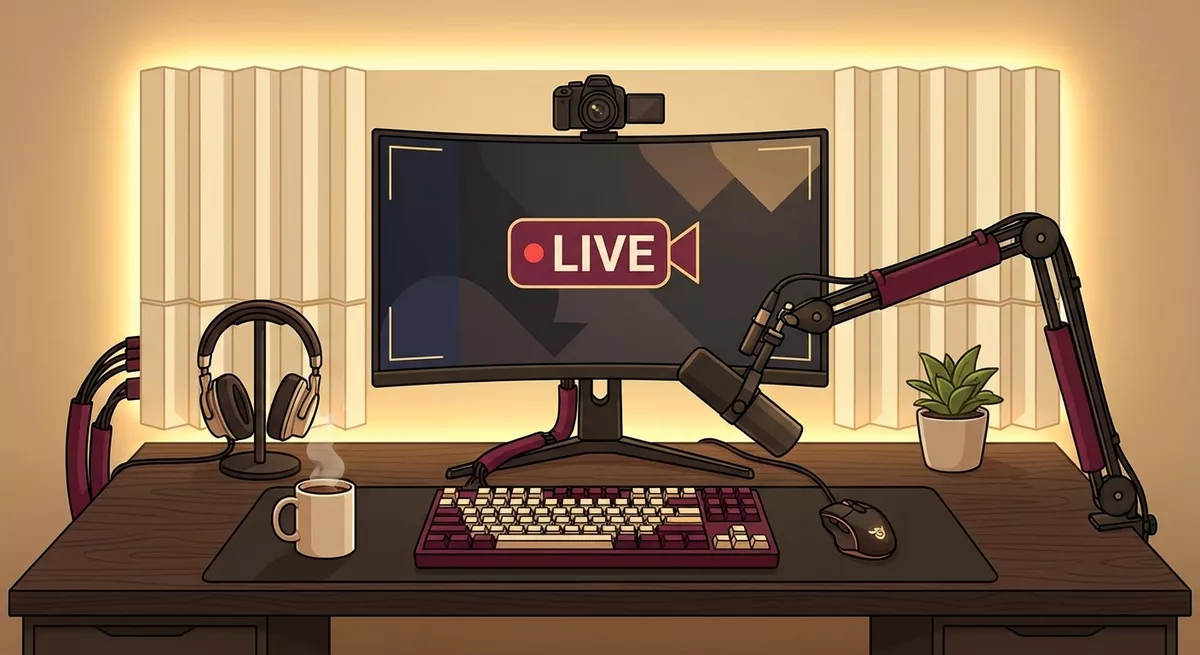
Your audience can tell the difference between performed fear and the real thing. That is why indie horror games dominate streaming – they produce genuine reactions, and genuine reactions drive engagement harder than any polished performance.
The strongest streaming horror games catch even experienced players off guard. Phasmophobia leads here because viewers become participants: chat calls out ghost types, identifies evidence, and warns you during hunting phases. Observation-style games like I’m On Observation Duty work the same way – your audience spots anomalies you missed, and that shared vigilance turns passive viewers into invested community members.
Streaming Pro Tip
Jump scare compilation potential drives discoverability. Games like Outlast and Phasmophobia generate standalone clip moments that introduce thousands of new viewers to your channel. A single well-timed scream can outperform weeks of regular content on social media.
Shorter indie horror games fit streaming schedules better than most genres. Iron Lung runs about 45 minutes. The Exit 8, roughly an hour. A single stream covers the whole game – setup, tension, climax, resolution – and your audience stays for the full arc instead of dropping off mid-session. Longer titles like SOMA or Visage split naturally into multi-stream series, which builds anticipation between episodes and gives viewers a reason to come back.
Horror also generates the most consistent chat activity of any genre. Viewers warning you about dangers, arguing over whether to open that door, celebrating when you survive – that back-and-forth builds communities fast. Platform algorithms reward active chat, which keeps horror streams visible in browse pages long after the initial spike.
If you want to learn how to stream indie games effectively, start with co-op horror for built-in social dynamics. Use a viewer analytics tool to track which horror moments generate peak engagement and clip activity. Our Twitch streaming guide covers the technical setup, and our streaming tools page has everything you need to optimize your horror content strategy.
Not every indie horror game reaches every storefront, and where you play shapes what you get access to. Here is how the platforms break down.
Steam and PC
PC has the largest indie horror library by a wide margin, plus mod support that extends games indefinitely. Custom campaigns for Amnesia, new ghosts for Phasmophobia, total conversions for a dozen other titles – mods keep games fresh years after release. VR horror on PC opens another dimension entirely. Phasmophobia in VR is a fundamentally different and far more intense game than the flat-screen version. The Steam section above covers platform-specific picks in detail.
PlayStation
Most major indie horror ports reach PlayStation, though typically months behind PC. The Amnesia collection, Outlast series, and SOMA all run well on PS5. Where PlayStation pulls ahead is PS VR2 – dedicated VR horror on console hardware, no expensive PC rig required. As the install base grows, expect more indie horror studios to target it.
Xbox
Game Pass makes Xbox the lowest-friction way to try horror games. Several indie horror titles rotate through the service, so you can sample the genre without committing $20 per game. The core library mirrors PlayStation for most major releases, and Game Pass remains the best entry point if you are still figuring out what kind of horror you like.
Nintendo Switch
The Switch has more horror than its family-friendly reputation suggests. Limbo, Inside, and Little Nightmares all play well in handheld mode, and portable play with headphones adds a closeness to the scares that larger setups lose. For a broader look at what the platform offers, see our list of the best indie games on Switch. If you want something that blends unease with comfort, cozy horror games occupy a unique space between tension and relaxation.
Frequently Asked Questions About Indie Horror Games
Frequently Asked Questions About Indie Horror Games
Indie horror games are horror titles built by independent studios or small teams without major publisher backing. They span every subgenre – psychological, survival, atmospheric, co-op – and live primarily on Steam, itch.io, and console storefronts. Because no corporate hierarchy filters the creative decisions, indie horror tends to be more experimental, more personal, and more willing to make you uncomfortable than anything a large studio would approve.
Visage. Its scares follow no pattern, its atmosphere is suffocating, and it refuses to give you any sense of safety. Most players who finish it report dread that persists well after they stop playing. Amnesia: The Dark Descent pioneered the formula and still holds up. For something recent, Iron Lung achieves remarkable terror through claustrophobia and imagination alone – no monsters needed.
For the most part, yes. Indie studios take creative risks that larger companies avoid because of corporate oversight and broad-audience mandates. Tight budgets push developers toward innovation in sound design and atmosphere instead of expensive graphical spectacle. Strong AAA horror exists – the Resident Evil remakes are proof – but the genre’s most boundary-pushing work consistently comes from independent developers who answer to nobody but their own vision.
Depends on what scares you. If you want the game that shaped modern horror, Amnesia: The Dark Descent. If you want the most active multiplayer community, Phasmophobia. Philosophical dread? SOMA. Best value in co-op horror? Lethal Company at $9.99. All four are strong starting points – pick the subgenre that appeals to you and start there.
Several of the best ones, yes. Phasmophobia supports up to four players hunting ghosts together. Lethal Company scales up to 32 players for co-op scavenging. Devour offers structured four-player demon hunting. The Outlast Trials brings survival horror online. Most co-op horror requires internet multiplayer, though a handful of titles support local split-screen on console.
SCP: Containment Breach for procedural survival horror. Cry of Fear for a full campaign that rivals paid games. Imscared for meta-horror that messes with your actual computer. All three are on Steam or itch.io. Beyond those, itch.io’s horror tag hosts hundreds of free games from independent creators – the free games section above covers the full list.
Your brain processes the fear as real while you know you are safe – that gap produces a rush similar to roller coasters. Adrenaline and dopamine spike simultaneously in a controlled environment. Sharing scares with friends or a stream audience amplifies the effect, turning individual fear into a social bonding experience. There is also genuine satisfaction in mastering something threatening, in proving you can handle what the game throws at you.
Pick a free engine – Unity, Unreal, or Godot. Spend your time on atmosphere, not graphics: sound design, lighting, and pacing scare people more reliably than visual fidelity does. Study the games that scared you and figure out exactly why specific moments worked. Build something short and focused before attempting anything ambitious. Many successful indie horror games started as game jam entries with a 48-hour deadline. Playtest relentlessly, because what terrifies you personally may not land the same way for someone else.
Find Your Next Horror Obsession
Find Your Next Horror Obsession
Fifteen years of indie horror, and the formula still works: small teams, personal vision, creative freedom, and budgets that force ingenuity over spectacle. Every game on this list exists because someone had a terrifying idea and the independence to build it without compromise.
Steam remains the best place to build a horror library. Free options on itch.io mean cost is never a barrier. And if you stream, horror content keeps growing in value – audiences will always choose authentic terror over polished performance.
The genre is accelerating, not slowing down. Anomaly detection games, analog horror aesthetics, and cooperative multiplayer are pushing the boundaries of what fear looks like in games. Somewhere right now, a small team with a terrifying concept is building the next Amnesia or Phasmophobia. They have nothing to lose and everything to prove.
For Streamers
Indie horror offers endless content potential. Genuine reactions build audiences, and these games deliver moments that spread far beyond your regular viewers. Start with co-op titles for built-in social engagement, then branch into single-player psychological horror for variety.
Looking for more games to play between horror sessions? Explore streaming games that build audiences through engaging gameplay, walking simulators that share horror’s focus on atmosphere and exploration, or story-driven games that deliver emotional impact through narrative. Your next obsession is waiting.